

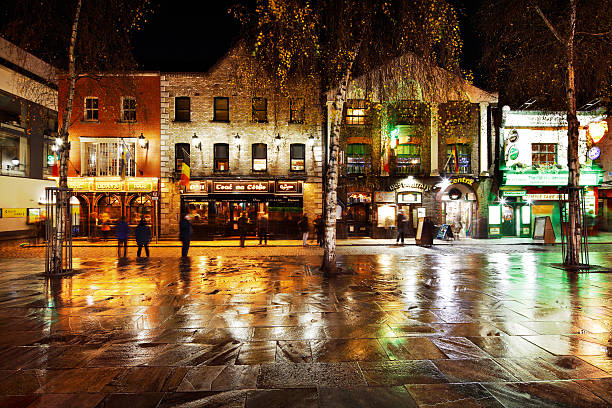
From South Great George’s Street to Camden Street and Grand Canal Dock, dublin nightlife technology venue operations are changing rapidly. High overheads, strict sound rules, and changing consumer habits force venue owners to modernise. Publicans now use smart point-of-sale software, automated staffing, and acoustic sensors to maintain healthy profit margins. Consequently, traditional pubs and modern venues rely heavily on digital tools to stay profitable.
KEY FACTS
-
Economic Impact: The Irish night-time economy contributes €3 billion annually and supports 40,000 jobs.
-
State Guidance: Fáilte Ireland targets 90% digital adoption across hospitality and tourism businesses.
-
Core Drivers: Rising operating costs, strict noise rules from Dublin City Council, and changing nightlife habits.
-
Key Stakeholders: Venue managers, publicans, Dublin City Council, Fáilte Ireland, and local technology providers.
TABLE OF CONTENTS
-
The New Economics of Dublin Nightlife
-
The Venue Tech Stack: From Door to Bar
-
AI Dynamic Pricing and Ticketing Solutions
-
Acoustic Monitoring and Urban Compliance
-
Staffing and Roster Automation in Irish Pubs
-
Safety, CCTV, and DPC Compliance
-
Future Outlook for Dublin’s Night-Time Economy
1. The New Economics of Dublin Nightlife
Late-night venues in Dublin operate on narrow margins. Independent publicans face higher electricity bills, rising wages, and expensive commercial rents. In addition, younger patrons spend money differently and prefer digital payments.
Because of these changes, Dublin City Council created a dedicated Night-Time Economy Strategy. Furthermore, state agencies urge businesses to embrace digital upgrades. Indeed, modern dublin nightlife technology venue operations help venues cut costs and boost daily productivity.
2. The Venue Tech Stack: From Door to Bar
Modern venues connect their point-of-sale systems, stock tracking, and door ticketing into one shared network. Therefore, venue managers see live sales data on their phones.
Integrated Point-of-Sale (POS) Systems
Cloud-based POS systems replace old cash registers. Platforms like TouchBistro and Flipdish let multi-bar venues track drink sales instantly. As a result, drink wastage drops from 8% down to under 1.5%. Moreover, automatic tap meters alert bar staff to over-pours immediately.
Cashless Transactions and Mobile Ordering
Dublin is now a mostly cashless nightlife market. Contactless payments and QR-code table ordering speed up service significantly. In fact, cashless transactions run 40% faster than cash payments. Therefore, bar staff serve more customers during peak weekend hours.
3. AI Dynamic Pricing in Dublin Nightlife Technology Venue Operations
Live music venues and clubs across Dublin now use smart pricing software. Instead of flat door prices, ticketing platforms adjust ticket costs based on real demand.
-
Early Bird Tiers: Lower prices reward early buyers two weeks before the show.
-
Standard Advance: Prices adjust steadily as ticket sales increase.
-
Peak Doors Entry: Algorithms raise door prices during high-demand hours.
Consequently, event organizers secure cash flow before the doors open. Furthermore, venue managers predict attendance far more accurately.
4. Acoustic Monitoring and Urban Compliance
Noise control is critical for city centre venues. As new apartments open near entertainment quarters, sound complaints can threaten operating licences.
To solve this, venues install calibrated sound sensors on exterior walls. These IoT devices log decibel levels directly to cloud dashboards. Additionally, smart sound limiters lower heavy bass frequencies automatically without reducing overall music volume. Thus, venues remain compliant with Dublin City Council rules while maintaining a great atmosphere.
5. Staffing and Roster Automation in Irish Pubs
Labor is a major ongoing expense for hospitality managers. Under Irish employment law, venues must track mandatory rest breaks and late-night pay rates accurately.
By using workforce apps like Bizimply or Deputy, managers build schedules quickly. The software analyses past sales figures, weather forecasts, and local concert dates. Then, it creates efficient shift rosters automatically. Consequently, pubs avoid over-staffing on quiet nights while keeping full coverage during busy weekends.
6. Safety, CCTV, and Data Protection Compliance
Patron safety remains a top priority across Dublin’s nightlife quarters. Venues combine smart cameras with staff training to build safer night-time spaces.
-
High-Definition CCTV: Low-light cameras monitor entrances, bar queues, and outdoor areas clearly.
-
ID Scanners: Digital scanners verify patron ages instantly and detect fake identity cards.
-
Data Privacy Rules: Under Data Protection Commission (DPC) guidance and EU AI Act rules, venues cannot store personal ID data indefinitely. Moreover, biometric facial recognition is strictly prohibited. Therefore, customer data is encrypted and deleted automatically.
7. Future Outlook for Dublin Nightlife Technology Venue Operations
Technology will continue to transform Dublin’s hospitality sector. In the coming years, new tools will further streamline venue management:
-
Smart Energy Controls: Systems will turn off draft coolers and ice machines automatically during non-trading hours.
-
Location-Based Marketing: Venues will send real-time drink offers to nearby opt-in users during early evening hours.
-
Shared City Analytics: Anonymous footfall data will help Dublin City Council align late-night bus services with venue closing times.
Ultimately, publicans who invest in dublin nightlife technology venue operations will protect their profit margins, ensure legal compliance, and offer safer experiences for everyone.
KEY TAKEAWAYS
-
Margin Protection via Tech: Integrated POS, automated pour tracking, and real-time inventory management reduce draft and spirit waste from 8% to under 1.5%.
-
Algorithmic Pricing: AI ticketing engines help promoters and venues optimize ticket sales and secure advance revenue well before doors open.
-
Smart Noise Control: IoT acoustic sensors and dynamic frequency limiters help venues maintain strict compliance with Dublin City Council noise regulations.
-
Automated Workforce Management: Predictive labor scheduling tools ensure venues stay compliant with Irish employment law while keeping payroll aligned with actual footfall.
-
DPC & Regulatory Alignment: Modern venue tech must adhere strictly to Irish Data Protection Commission (DPC) rules and the EU AI Act, strictly limiting data retention and prohibiting unauthorized biometric processing.
FAQ SECTION
1. How are Dublin venue operators using AI in their daily operations?
Dublin venue operators use AI for predictive staff scheduling, dynamic ticket pricing, automated stock replenishment, and intelligent acoustic monitoring. These systems analyze historical sales data, weather forecasts, and local event schedules to optimize venue operations and lower costs.
2. What are the noise compliance rules for Dublin nightlife venues?
Dublin City Council enforces strict sound limits ($LA_{eq}$) on commercial venues operating near residential zones. Venues use calibrated IoT acoustic sensors and frequency limiters to measure decibels in real time and attenuate low-end frequencies before sound breaches boundary limits.
3. How does Fáilte Ireland support digital technology adoption in hospitality?
Fáilte Ireland’s corporate strategy sets a clear goal for digital and AI adoption across tourism and hospitality businesses. The agency provides training, grant supports, and digital capability frameworks to help venue operators adopt modern management tools, lower costs, and drive revenue growth.
4. Are ID scanners legal in Dublin nightclubs under GDPR?
Yes, but their use is strictly regulated by the Data Protection Commission (DPC). Scanners must collect only the minimum necessary data required for venue safety and entry verification. The data must be encrypted and automatically deleted after a specified retention period. Automated biometric identification or facial recognition is prohibited under the EU AI Act.
5. What is the impact of cashless systems on Dublin bar speeds?
Cashless transactions reduce bar service times by up to 40%, allowing venues to process higher transaction volumes during peak late-night hours while minimizing cash-handling overheads and security risks.
6. How does automated roster management software benefit Irish hospitality workers?
Tools like Bizimply and Deputy help ensure venues comply with the Organisation of Working Time Act. They automatically track mandatory rest periods, calculate Sunday premiums, ensure fair shift distribution, and allow staff to swap shifts easily through mobile apps.
7. Which areas in Dublin are seeing the highest adoption of venue technology?
High-density night-time districts—including South Great George’s Street, the Creative Quarter, Camden Street, Wexford Street, Temple Bar, and Grand Canal Dock—are leading adoption due to high customer turnover, strict noise regulations, and high operational costs.
8. How does smart lighting and CCTV integrate into Dublin’s Night-Time Economy Strategy?
Dublin City Council’s strategy highlights public safety and safer city experiences. Integrated high-definition CCTV networks, smart public lighting, and welfare support zones help ensure safe, monitored environments for patrons across entertainment quarters.
