

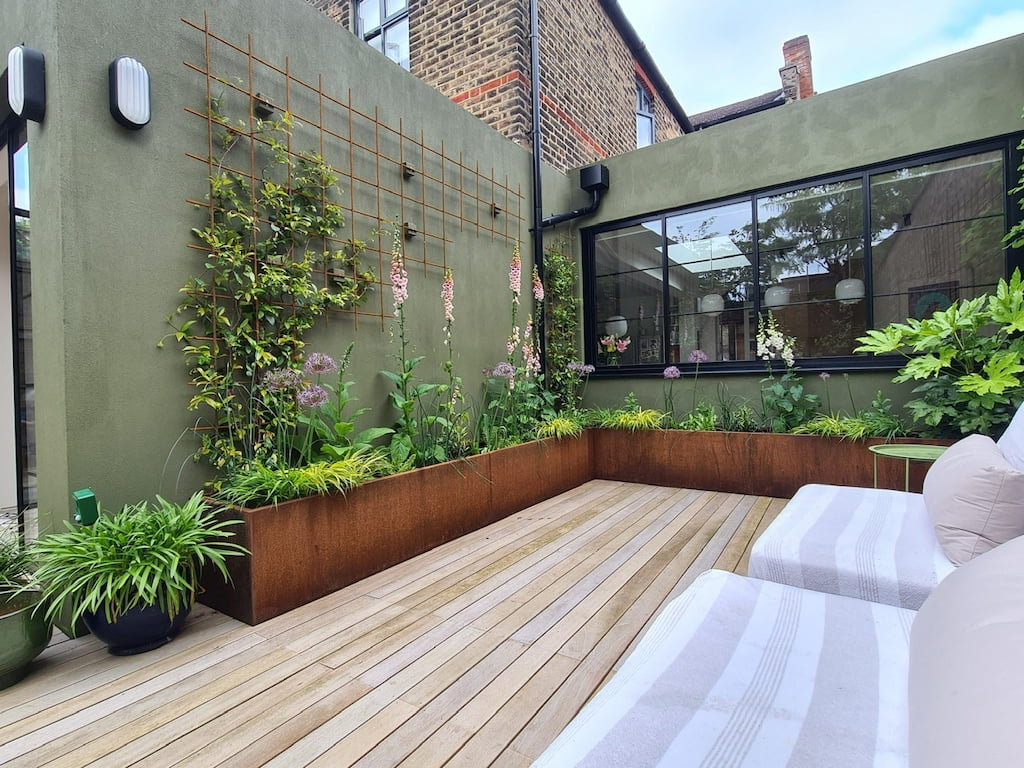
Late summer is the perfect moment to think ahead. The garden is in full swing, but with autumn just around the corner, many homeowners and landscape designers start asking the same question: what will actually last? Trends come and go, but the materials you choose for your outdoor space tell a different story. If you are looking for something that gets better with age rather than worse, it is worth understanding why weathering steel has become one of the most sought-after materials in contemporary garden design and why the investment pays off in ways most people do not immediately consider.
The case for materials that age with purpose
Most outdoor materials fight against time. Painted metal chips, wood rots, plastic fades and concrete cracks. Weathering steel, by contrast, was engineered to do the opposite. It forms a stable oxide layer on its surface when exposed to the elements, and that layer essentially becomes its own protective coating. The result is a warm, textured, rust-toned finish that deepens and evolves over the seasons. This is not deterioration; it is a material doing exactly what it was designed to do. For gardens in Ireland, where rain and humidity are reliable constants, this characteristic makes an enormous difference. Instead of scheduling annual maintenance or replacing planters every few years, you invest once and let nature do the finishing work for you.
Why the long-term economics make sense
There is a tendency to compare initial purchase prices without accounting for what comes after. A cheaper planter might look fine in year one, but factor in repainting, treating, or replacing it and the true cost looks very different by year five. High-quality corten steel planters sit at a higher price point upfront, but they require virtually no ongoing maintenance. There are no coatings to reapply and no structural degradation to worry about. Over a ten-year period, the cost per year becomes remarkably low. For commercial landscaping projects, public spaces or private gardens where consistency of appearance matters, this predictability is genuinely valuable. You are not just buying a planter; you are removing a recurring line item from your maintenance budget.
Design versatility across seasons
One aspect that rarely gets enough attention is how well this material adapts to different planting schemes throughout the year. In August, lush ornamental grasses and late-summer perennials pop beautifully against the warm amber tones of the steel. As autumn arrives, the colour palette of the planter seems to harmonise naturally with falling leaves and harvest-season plantings. In winter, the contrast between a bare architectural shrub and the deep, russet surface of the container creates a sculptural quality that few other materials can match. This seasonal interplay means the planter is never out of place; it evolves alongside the garden rather than competing with it. For anyone thinking seriously about long-term garden aesthetics, that adaptability is a significant design advantage.
A material worth building your outdoor space around
The smartest outdoor investments share a common quality: they contribute more to the space over time than they take away from it. Weathering steel fits that description precisely. It suits both contemporary minimalist layouts and more naturalistic planting schemes, works equally well at domestic and commercial scale, and demands almost nothing from the person who installs it. If you are planning a garden refresh this autumn or specifying materials for a landscaping project, it is well worth exploring the range available at mysteel.ie to see how these containers could anchor your design for years to come. Start with the right material and the rest of the space tends to fall into place around it.
Frequently Asked Questions (FAQ)
Why are corten steel planters a smart long-term investment?
Unlike wood, plastic, or painted metals that chip, rot, or crack over time, corten steel forms a stable protective oxide coating when exposed to weather. It requires virtually no ongoing maintenance or repainting, giving it a remarkably low cost per year over a 10-year period.
How does weathering steel protect itself against rain and humidity?
When exposed to outdoor elements, weathering steel generates a durable rust-toned oxide layer on its surface. This layer seals the steel underneath and acts as a barrier, preventing deep structural corrosion without the need for artificial chemicals or coatings.
Are corten steel planters suitable for commercial and residential landscaping?
Yes. Corten steel’s structural durability and warm amber finish complement both modern minimalist designs and naturalistic gardens. Its low maintenance requirements make it suitable for domestic garden updates as well as public spaces and commercial projects.
How do corten steel planters adapt to different seasons?
The deep russet and warm amber tones of corten steel harmonise naturally with late-summer perennials, autumn foliage, and bare architectural plants in winter, providing year-round visual appeal and structure.
