

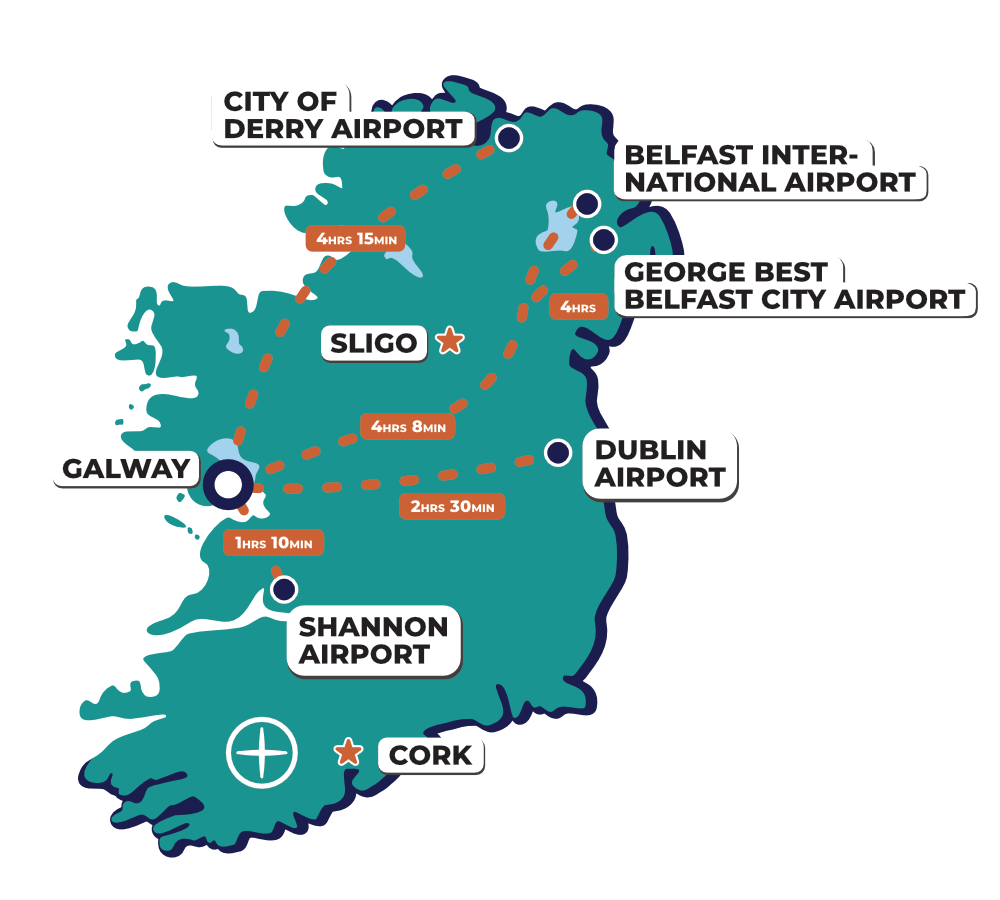
Ireland’s digital economy has reached a major inflection point. Consequently, businesses across the state are actively competing for specialised talent. If you want to advance your career or scale a business, identifying the in demand digital skills in Ireland is essential. According to recent European Commission data, 82.8% of individuals in Ireland possess basic digital skills. This places the state well ahead of the European average. Furthermore, Microsoft’s AI Diffusion Report ranks Ireland 4th globally for AI adoption per capita.
The Enterprise Digital Skills Deficit
However, this high individual usage hides a growing skills shortage across domestic enterprises. Research published by Digital Business Ireland reveals that 68% of Irish businesses identify a lack of internal skills as their main barrier to digital adoption. Additionally, data from Generation Ireland indicates that 83% of tech employers encounter hiring difficulties. As a result, this talent shortage threatens the addition of 40,000 projected digital roles.
Impact of the EU AI Act on Local Hiring
Meanwhile, new regulatory mandates are transforming local hiring priorities. As enforcement under the EU Artificial Intelligence Act takes effect, the demand for tech capabilities has shifted. Employers are moving away from generic software engineering toward domain-specific skill sets tailored to Dublin, Cork, and Galway.
KEY FACTS
-
Global AI Rank: Ireland ranks 4th globally for AI adoption per capita.
-
Core Skill Constraint: 68% of Irish enterprises name internal skills deficits as their main barrier to software deployment.
-
ICT Workforce Share: ICT specialists account for 6.3% of total employment in Ireland, well above the EU average.
-
Economic Opportunity: Full AI integration could contribute up to €250 billion to Ireland’s GDP by 2035.
-
State Talent Investment: Over 14,700 workers accessed specialized digital upskilling via Skillnet Ireland over the past year.
TABLE OF CONTENTS
-
National Overview: In Demand Digital Skills Ireland
-
Dublin: High Demand AI Skills, Silicon Docks, and Legal Tech
-
Cork: Biopharma Automation, Smart Manufacturing, and IoT
-
Galway: MedTech AI, HealthTech Innovation, and NLP
-
Cross-Regional Technical Capabilities in Top Demand
-
EU AI Act & Data Protection Governance Demands
-
Bridging the Gap: Skillnet Ireland and Enterprise Grants
-
Strategic Outlook for Irish Enterprise
National Overview: In Demand Digital Skills Ireland
The tech recruitment market in Ireland has shifted significantly. Instead of rapid headcount expansion, companies now focus on targeted talent acquisition. While global multinational headquarters along Dublin’s Grand Canal Dock continue to hire software engineers, indigenous Irish SMEs need professionals who bridge the gap between technical execution and business value.
| Metric | Ireland Figure | EU Average Benchmark | Source |
| Basic Digital Skills | 82.8% | 60.4% | Eurostat |
| ICT Share of Employment | 6.3% | 5.0% | Eurostat |
| Women in ICT Roles | 24.4% | 19.5% | Eurostat |
| Generative AI Usage | 44.9% | 32.7% | EC Report |
| Tech Employer Shortages | 83.0% | N/A | Gen Ireland |
Official data shows that basic digital literacy is high across the state. However, advanced software specialisation remains limited. Therefore, employers face rising costs when competing for niche technical expertise.
Dublin: High Demand AI Skills, Silicon Docks, and Legal Tech
As Ireland’s commercial technology hub, Dublin displays a massive demand for enterprise architecture, financial technology solutions, and regulatory compliance frameworks.
-
Core Industry Anchors: Big Tech Multinationals, Enterprise Software, Fintech, IFSC Financial Institutions, Legal Services.
-
Primary Locations: Silicon Docks, Grand Canal Dock, South Great George’s St, Creative Quarter, IFSC, Citywest.
-
Top In Demand Digital Skills: MLOps, Cloud Architecture, AI Governance, and Quantitative FinTech Engineering.
Key Drivers in the Capital
First, Machine Learning Operations (MLOps) specialists are urgently needed across Grand Canal Dock. Tech giants like Meta, Google, and Salesforce require experts to move generative AI models into production.
Second, financial institutions in the IFSC demand experts in automated fraud detection, algorithmic risk modeling, and secure API architectures.
Finally, legal and technical consulting firms require professionals who combine software understanding with deep expertise in the EU Artificial Intelligence Act. As a result, finding these in demand digital skills in Ireland remains a primary challenge for Dublin enterprise leaders.
Cork: Biopharma Automation, Smart Manufacturing, and IoT
Cork’s technology sector is deeply connected to life sciences, advanced manufacturing, and marine technology. Home to global pharmaceutical leaders and Apple’s European headquarters, Cork requires digital talent focused on hardware-software integration.
-
Core Industry Anchors: Biopharma, Medical Device Manufacturing, Consumer Tech, Marine Energy.
-
Primary Locations: Ringaskiddy Bio-Hub, Kilbarry, Little Island, Cork City Docklands, UCC Innovation Hub.
-
Top In Demand Digital Skills: Industrial IoT (IIoT), Computer Vision, PAT Data Engineering, and OT Cybersecurity.
Key Drivers in the Southern Hub
Biopharma plants in Ringaskiddy deploy automated inspection systems. Consequently, these facilities require engineers skilled in edge computing and computer vision models to monitor production quality.
Furthermore, as manufacturing plants connect physical machinery to cloud networks, Operational Technology (OT) cybersecurity specialists are vital. Companies actively seek experts in network defense, SCADA security, and ISA/IEC 62443 compliance.
In addition, life sciences enterprises require data architects who can structure real-time sensor streams to meet strict regulatory validation standards.
Galway: MedTech AI, HealthTech Innovation, and NLP
Galway serves as one of the world’s leading Medical Technology hubs. Supported by research facilities at the SFI ADAPT Centre, the Insight SFI Centre, and University of Galway, the region demands highly specialized engineering capabilities.
-
Core Industry Anchors: Medical Devices, HealthTech, AI Academic Research Spin-Outs, Software Engineering.
-
Primary Locations: Ballybrit Business Park, Mervue Business Park, University of Galway Campus.
-
Top In Demand Digital Skills: Software as a Medical Device (SaMD), Clinical NLP, ISO 13485 / ISO 42001 Validation, Predictive Diagnostics.
Key Drivers in the Western Hub
Startups and established MedTech firms in Ballybrit need engineers to embed machine learning models into diagnostic devices. These systems must follow strict FDA and EU Medical Device Regulation (MDR) standards.
Similarly, research nodes working alongside the Health Service Executive (HSE) require talent proficient in Natural Language Processing (NLP) to process clinical documentation.
Moreover, diagnostic devices demand transparent model logic. Therefore, engineers who design interpretable algorithms are heavily recruited across the region.
Cross-Regional Technical Capabilities in Top Demand
Across all three urban hubs, specific capabilities consistently attract high recruitment activity and command strong salary premiums:
-
Cloud Data Architecture: Expertise in managing multi-cloud enterprise environments across AWS, Azure, and Google Cloud.
-
Full-Stack AI Engineering: Proficiency in combining modern frontend frameworks like React with backend AI orchestration tools like LangChain and Python.
-
Cybersecurity & Identity Management: Zero-trust network engineering, automated threat monitoring, and secure software development.
-
Business Intelligence & Automated Analytics: Converting fragmented operational data into actionable insights using PowerBI, Tableau, and custom Python pipelines.
EU AI Act & Data Protection Governance Demands
The phased enforcement of the EU Artificial Intelligence Act has introduced new skill requirements across the Irish economy. Companies can no longer deploy complex software without documented auditing, risk classification, and data traceability.
| AI Act Risk Tier | Mandatory Requirements | Required Enterprise Skill Set |
| High-Risk AI Systems | Risk assessment, logging, human oversight | AI Auditors, Quality Management Specialists |
| General Purpose AI | Transparency, copyright adherence, summary datasets | Model Evaluation Engineers, IP Tech Counsel |
| Data Privacy & Training | Anonymisation, lineage tracking, local storage | Data Protection Officers, DPC Compliance Engineers |
Because of these strict rules, Irish enterprises are hiring AI Governance Officers and Data Compliance Engineers. These specialists draft algorithmic impact assessments, implement ISO/IEC 42001 standards, and ensure models comply with Irish Data Protection Commission guidelines. Consequently, regulatory technology expertise has quickly become one of the most in demand digital skills in Ireland.
Bridging the Gap: Skillnet Ireland and Enterprise Grants
To address the shortage of qualified tech talent, public agencies and industry bodies have launched several structured upskilling initiatives:
-
Skillnet Ireland: Skillnet recently delivered digital upskilling to 14,711 workers across 24,000 businesses. Dedicated networks, such as AI Skillnet and Technology Ireland Skillnet, provide co-funded training programs for domestic SMEs.
-
Enterprise Ireland: Through its Digital Process Innovation Grant and AI Adoption funds, Enterprise Ireland helps indigenous firms reskill internal teams and integrate AI automation into export processes.
-
Springboard+ & HCI: Higher education institutions offer conversion courses and micro-credentials in Artificial Intelligence, Cybersecurity, and Cloud Computing that are fully funded or heavily subsidised for eligible residents.
Strategic Outlook for Irish Enterprise
Ireland’s high rate of individual digital adoption provides a solid foundation for enterprise transformation. However, closing the skills gap requires structured investment from domestic businesses. Organizations that limit tech investments to basic software licensing risk falling behind regional and European competitors.
To remain competitive, Irish firms across Dublin, Cork, and Galway must prioritize structured internal reskilling. By leveraging state-backed funding via Skillnet Ireland and mastering the most in demand digital skills in Ireland, local companies can build sustainable competitive advantages in an AI-driven global economy.
Key Takeaways
-
High Individual Adoption vs. Enterprise Gap: Ireland ranks 4th globally for AI adoption per capita, yet 68% of businesses identify internal skill constraints as their main operational barrier.
-
Dublin’s Focus Area: Talent demand centers on MLOps, cloud solutions architecture, fintech engineering, and EU AI Act legal compliance across Silicon Docks and the IFSC.
-
Cork’s Focus Area: Demand is led by smart manufacturing, operational technology (OT) cybersecurity, computer vision, and biopharma process automation.
-
Galway’s Focus Area: Prioritises Software as a Medical Device (SaMD), natural language processing for health data, and explainable diagnostic algorithms.
-
Regulatory Drivers: The EU AI Act requires certified skill sets in risk management, algorithmic auditing, and ISO/IEC 42001 compliance.
-
Funding & Upskilling Pathways: State-backed initiatives through Skillnet Ireland, Enterprise Ireland, and Springboard+ offer co-funding to help businesses bridge internal skills shortages.
FAQ Section
What are the most in-demand digital skills in Ireland right now?
The most sought-after digital capabilities include Machine Learning Operations (MLOps), Cloud Solutions Architecture (AWS/Azure), Cybersecurity, Data Engineering, and EU AI Act Compliance Engineering.
How does tech skill demand differ between Dublin, Cork, and Galway?
Dublin focuses on Big Tech enterprise software, MLOps, fintech, and regulatory compliance. Cork prioritizes biopharma automation, computer vision, operational technology cybersecurity, and smart manufacturing. Galway concentrates on Software as a Medical Device (SaMD), clinical NLP, and diagnostic healthtech.
What impact is the EU AI Act having on hiring in Ireland?
The EU AI Act creates demand for specialists in algorithmic risk assessment, AI ethics auditing, ISO/IEC 42001 compliance, and legal-tech architecture, as firms must legally document high-risk AI deployments.
What state funding is available for digital upskilling in Ireland?
SMEs and enterprise workers can access co-funded training programs through Skillnet Ireland, digital adoption grants via Enterprise Ireland, and higher-education conversion courses funded by Springboard+ and the Human Capital Initiative.
Which programming languages are in highest demand across Irish tech hubs?
Python leads for data engineering, machine learning, and automation. JavaScript/TypeScript (React, Next.js) dominates full-stack web development, while C++ and Rust are heavily utilized in Cork’s industrial IoT and Galway’s MedTech systems.
Are non-technical professionals in Ireland affected by the digital skills gap?
Yes. Modern enterprise roles in marketing, finance, HR, and legal services increasingly require proficiency in generative AI tools, prompt engineering, data visualization (PowerBI), and privacy compliance under GDPR and the EU AI Act.
Why are Irish businesses struggling to hire tech talent despite high regional digital literacy?
While 82.8% of the Irish population has basic digital skills, advanced engineering, data architecture, and regulatory compliance demand specialized expertise. Rapid technological change creates a deficit in these advanced areas.
How can an Irish SME begin upskilling its current workforce?
SMEs can partner with local Skillnet networks (such as AI Skillnet or Technology Ireland Skillnet), apply for Enterprise Ireland Digital Process Innovation funding, and utilise micro-credentials offered by Irish universities.
